Friday, March 28, 2008

HKAB Publication

PUBLICATION
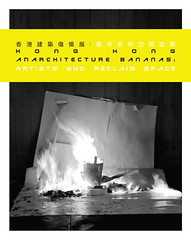
Hong Kong Anarchitecture Bananas: Artists who reclaim space
Published by Artist Commune & Studio Bibliothèque
29 Mar 2008, Hong Kong


bananas_01

bananas_02

bananas_03

bananas_04

bananas_05

bananas_06

bananas_07

bananas_08

bananas_09

bananas_10

bananas_11

bananas_12

bananas_13

bananas_14

bananas_15

bananas_16

Wednesday, March 26, 2008

The Organisers

About Artist Commune
Taking on the perspective of Hong Kong artists, Artist Commune was established by the core members of Hong Kong Young Artists Association in July 1997. It became a non-profit organization funded by Hong Kong Arts Development Council (ADC) in the following November. As one of the yearly beneficiaries of ADC, Artist Commune registered as a non-profit limited company in December 1999. The establishment of Artist Commune strongly reflects the desire of some artists for a space of art making and exhibition. Since the beginning with artists workshops at Cheung Fat Industrial Building in Shek Tong Tsui, Artist Commune has attracted many local and foreign artists for gatherings and seminars in sharing of their different artistic experiences. Thereafter, in spite of many times of moving, Artist Commune remained to be the base for artists to create and exhibit artworks, and to exchange ideas and experiences. To date, Artist Commune has fledged to be a diversified civic art organization, providing not only exhibition venues for local visual artists but also opportunities for the development of various art forms and artistic collaborations.
<http://www.artist-commune.com/>

About Studio Bibliothèque
Studio Bibliothèque facilitates experiments in making, writing, curating and learning. It is the Hong Kong-based working and living space of Singapore-born artist Michael Lee Hong Hwee. The studio has been featured in the media including in the regional lifestyle and design magazine iSh, Sunday Morning Post, Ming Pao Daily, Ming Pao Weekly, Weekend Weekly, and Take Me Home.<http://www.studiobibliotheque.blogspot.com/>

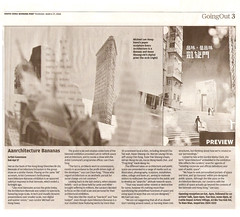
Media Coverage: SCMP

MEDIA COVERAGE
South China Morning Post, GoingOut p. 3
By Janice Leung
27 Mar 2008, Hong Kong

scmp_hkab

Tuesday, March 25, 2008

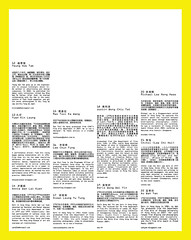
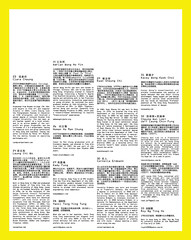
About the Artists

Andrew S. Guthrie
Born in New York, Andrew S. Guthrie has lived and worked in Boston Massachusetts where he owned and operated 88 Room gallery during 1988 – 1998. He was the winner of Massachusetts Cultural Council Photography Fellowship in 2003. In 2005, he moved to Hong Kong and currently teaches at Hong Kong Art School.
Andrew S. Guthrie於紐約市出生,並於波士頓生活及工作。一九八八年至一九九八期間擁有和經營「88房間」畫廊。二零零三年贏得馬薩諸塞州文化協會攝影獎學金。二零零五年遷居香港,現任教於香港藝術學院。
localidea.com

區華殷 Au Wah Yan

Born in Hong Kong in 1984, Au Wah Yan graduated from the Department of Fine Arts of Chinese University of Hong Kong (CUHK) in 2007. Her work ranged from drawing and photography to mixed-media sculpture. Selected prizes include: Cheung’s and Chu’s Fine Arts Award in Mixed Media (2007). She is a nature lover.
1984年生於香港。2007年畢業於香港中文大學藝術系。從事立體﹑攝影﹑繪畫﹑混合媒介創作。曾獲朱氏及張氏創作獎。現為文化管理碩士生,閒來搞雜誌。喜愛大自然。
wahyan.blogspot.com

張嘉莉Clara Cheung
2002年畢業於美國Rhodes College,獲學士學位,主修純藝術和電腦科學。2003年獲香港中文大學教育文憑,主修藝術教育。2007年獲嶺南大學文化研究碩士學位。在過去四年,任本港中學視覺藝術科科主任、現為非牟利藝術團體「二二六工程」要員、C & G藝術單位創辦人,曾多次參與香港及海外聯展。近期,以行為藝術為主要創作媒介,部分作品為澳門藝術博物館收藏。
Graduated from Rhodes College (TN, USA) with majors in Fine Art and Computer Science in 2002, Clara Cheung took the Postgraduate Diploma in Education at CUHK afterwards, and received a master degree of Cultural Studies from Lingnan University. She has been an art teacher (panel) at a local school, and is an active member of the non-profit art group, Project226, and the co-founder of C & G Artpartment. Having had numerous solo and group exhibitions in Hong Kong and overseas, Cheung has works collected by Macau Art Museum. She now mainly focuses on exploring performance art.
candg-artpartment.com

Suki Chan陳淑雲

生於香港,並於倫敦及曼徹斯特發展。她的創作嘗試從多重方向結合科技與日常生活的物品,創作迷離與失神的裝置作品。作品往往隱喻時間,記憶與空間。她以私密與個人的方向,探討白日夢與現實社會結構之間關係。
Born in Hong Kong and based in London and Manchester, Suki Chan develops a multi-disciplinary practice that combines technology with everyday materials and objects, creating installations that are enchanting and disorientating. Her works are loaded with symbolic references to time, memory and place. She is interested in the space between an individual’s dreams and existing social structures and explores in an intimate and personal way, imposed truths and archetypes.
sukichan.co.uk

朱德華Almond Chu
生於香港。1986畢業於日本東京綜合寫真專門學校藝術攝影系。現職專業攝影師及攝影藝術家。其作品曾於德國、意大利、丹麥、加拿大、日本、中國、香港、新西蘭等地展出。
作品獲香港藝術館、香港文化博物館、廣東美術館、香港大學美術博物館、利希慎基金會、國泰航空公司、愛克發吉華 (香港) 有限公司及私人收藏家收藏。
Born in Hong Kong, Almond Chu started his career as a professional photographer and photographic artist after graduating from the Fine Art Photography Department of the Tokyo College of Photography in 1986. He has been invited to exhibit his work in various countries such as Germany, Italy, Denmark, Canada, Japan, China, Hong Kong and New Zealand. His works have been collected by Hong Kong Museum of Art, Hong Kong Heritage Museum, Guangdong Museum of Art, University Museum and Art Gallery of the University of Hong Kong, Lee Hysan Foundation, Cathay Pacific Airways, Agfa Gavert (HK) Ltd and private collectors.
almondchu.com

Cornelia Erdmann 泥人

Cornelia Erdmann was born and brought up in Frankfurt, Germany. She received a degree in architecture in 2002 and a MFA in Public Art in 2005 from Bauhaus-University Weimar, Germany. Since 2002 Cornelia Erdmann is intensely involved in making art. In 2003 Cornelia Erdmann is a lecturer for Mediatecture at the Department of Architecture of the ETH in Zürich, Switzerland. At the same time she also teaches workshops at Bauhaus-University Weimar, and continues her work as a media-artist. In August 2006 Cornelia moves to Hong Kong. In her projects she is mainly interested in the interaction of space and society, scrutinising aspects of urbanity and life style – always bearing a small smile along the way.
泥人出生並生長於德國法蘭克福,就讀於德國威馬包浩斯大學,零二年獲頒建築學士學位,零五年獲公共藝術藝術碩士學位。泥人從零二年開始參與創作,零三年瑞士蘇黎世聯邦理工學院建築系任職講師,教授媒介建築;同時亦於威馬包浩斯大學舉辦工作坊,並繼續媒介創作。零六年八月泥人移居香港。她的作品關注空間與社會的互動,以及城市生活種種面向──永遠在生活路上保持微笑。
corneliaerdmann.de

蛙王(郭孟浩)Frog King (Kwok Mang-ho)
多媒體的藝術工作者。1970年畢業於葛量洪教育學阮的美術專科,1980年至1995
年間遊藝紐約十五年。在過去三十五年,郭氏於本港及海外舉行展覽及從事行為
表演,包括1979年北京長城行為、1989年至1999年《青蛙眼鏡計劃》及2001年《蛙王藝術館計劃》。郭氏獲獎無數,包括1975年及1998年市政局的藝獎、1987年美國紐約的最佳社區藝術團體獎及1998年香港藝術發展局的視藝成就獎。2005年獲澳門藝街博物館頒發中國行為藝術文獻展優異獎。
Frog King (Kwok Mang-ho) received his Fine Arts Education at Graham College of Education in Hong Kong from 1967 to 1970. He lived and made art in New York for 15 years. Over the past 35 years, Kwok has presented numerous shows all over the world such as solo exhibition at Graham College of Education in 1967, Great Wall performance in Beijing in 1979, Project in 2001. As a multi-media artist, Kwok has received many awards including Fine Arts Award by Urban Council in 1975 and 1998, the Best Community Arts Service group awards in New York in 1987, Emeritus Fellowship by the Hong Kong Arts Development Council in 1988, Documentaries of Chinese Performance Art Award by Macau Museum of Art 2005.
kwokart@gmail.com

Fung Ka Yee馮嘉儀
Born in Enping, Fung Ka Yee is an MFA student from the Fine Arts Department of the CUHK. She currently wanders between traditional and modern seal carving (temporary), while hoping to plunge into piecemeal social engineering (also temporary).
網名手立此木。祖籍恩平。現為中大藝術系藝術創作研究生。(暫時的)工作是遊走傳統與當代篆刻之間。(暫時的)願望是投身小件社會工程。
kadyee@gmail.com

WAS (We Are Society)
自2006年9月開始,每個星期日假天星碼頭,自發進行持續性集體藝術行動,以喚起更多市民對城市環境和文化保育的關注。雖然天星皇后已不在,但我們對城市、歷史和文化生活仍然著緊。
成立 W.A.S(We Are Society)我們相信藝術,所以我們以藝術來行動。如果你問我們是什麼
我們就是社會。
WAS (We Are Society) was established during the art actions to conserve the Star Ferry Pier and the Clock Tower. Although the Star Ferry and the Queen’s Pier no longer exist, WAS is still concerned about the history, culture and living of the city. According to WAS: “We believe in art. We act with art.”
wearesociety.blogspot.com

Homan Ho Man Chung, 何文聰
2007年於香港中文大學經濟系畢業,未能適應辦工室環境,轉而出賣手工勞力為生。作品主要為動態雕塑。
Homan Ho Man Chung graduated with an Economics degree, and minored in Fine Arts from CUHK in 2007. He was part of the Fotanian: Fotan Artists Open Studios 2008 event.
homan.studio@gmail.com

Kwan Sheung Chi 關尚智
In 1980, Kwan Sheung Chi was born in Hong Kong. In 1999, he entered the Fine Arts Department of the Chinese University of Hong Kong. In 2000, he was named the King of Hong Kong New Artist. In 2002, his Kwan Sheung Chi Touring Series Exhibitions, Hong Kong toured in 10 major exhibition venues in Hong Kong. In the same year, the Hong Kong Art Centre presented A Retrospective of Kwan Sheung Chi. In 2003, he graduated with third class honours bachelor degree from the Fine Arts Department of CUHK. From 2004, he became a nine-to-fiver in Central. In 2005, he helped his mother, Tsang Yin-hung, to create her first artwork, Teapoy, which was included in the Hong Kong Art Biennial 2005, as a selected entry. His artworks haven't been widely exhibited around the world.
1980年生於香港。1999年入讀香港中文大學藝術系。2000年起成為香港藝術新人王。2002年「關尚智香港巡迴展」於香港十個主要展覽場地巡迴展出,同年於香港藝術中心舉辦「關尚智回顧展」。2003年畢業於香港中文大學藝術系,並獲三等榮譽文學士學位。2004年起成為上班族於中環上班。2005年協助母親曾燕雄創作其第一件作品《茶几》,《茶几》後入選「香港藝術雙年展2005」。他的作品沒有在世界各地廣泛展出。
www.kwansheungchi.com

Lau Chi Chung 劉智聰
長洲人,多年從事電視廣告製作美術指導經驗,
現職多媒體製作總監,畢業於英國,所修讀的是室內設計,而自己喜歡的卻是電影、攝影、拾荒及旅行。對空間 / 歷史 / 影像十分著迷,擁有室內設計學士學位的我,
對空間的感受,除了感性,還有更多理性的認識。創作作品主要是獨立電影及錄像 / 廢墟攝影與及拾荒藝術創作。題材大多圍繞地方(香港)的故事、時間的關係與自己的聯繫以及到被人廢棄的地方攝影,2000年開始以散步 / 拾荒加攝影的方式再認識這個自己成長的地方。
Based in Cheung Chau, Hong Kong, Lau Chi Chung has been working in TV commercial productions as an art director, and currently as multi-media production director. He studied interior design and was graduated in England. He likes cinema, photography and travelling, and obsessed with space, history and images. He has been working on independent movies, filming and photography, and is mainly concerned with stories of different places about Hong Kong, shooting in the ruins area, and creations with abandoned objects.
lauchichung.com

Chihoi (Lee Chi Hoi) 智海
一九七七年生於香港。一九九六年起於各報章雜誌發表漫畫及文字作品,漫畫亦多見於多部海外漫畫選集,近年積極引介當代歐洲漫畫選集,並從事視藝教育工作。漫畫集包括 《The Writer and Her Story》、《Piece of Mind》、《默示錄》、《灰掐》,另與歐陽應霽合著《路漫漫 - 香港獨立漫畫25年》。
Chihoi (Lee Chi Hoi) was born in 1977 in Hong Kong. Since 1996, he has been contributing his comics and writings to magazines and newspapers. His works have also been selected in overseas comic publications. Recently he endeavours to introduce European Contemporary comics to the local readers.
chihoi.net

Michael Lee Hong Hwee 李鴻輝
生於新加坡,現駐留香港。他的創作包括模型,手製書本,攝影,錄象,裝置,寫作及展覽策劃等。主題關注慾望與空間的關係。2005年他獲得新加坡國家文化局頒發年青藝術家獎(視覺藝術)。
Michael Lee is a Singapore-born artist based in Hong Kong. He explores his concern about the relation between desire and space through model-making, book-making, photography, video, installation, writing and curating. He was a recipient of Young Artist Award (Visual Arts) 2005, conferred by National Arts Council, Singapore.
michael.farm.sg

Warren Leung Chi Wo 梁志和
梁志和於一九六八年出生,香港中文大學藝術系碩士畢業。一九九六年為藝術空間的創辦者之一。一九九五年得到夏利豪藝術基金會雕塑首獎;九七年獲得亞洲文化協會獎學金及香港當代藝術雙年展臨時市政局大獎。二零零一年於威尼斯雙年展香港展區展出其場域特定計畫。他曾在香港、紐約、多倫多、日本及瑞士舉行個人展覽。最近參與展覽包括蘭德州國際攝影節(2007)、釜山雙年展(2006)及廣州三年展(2005)
Born in Hong Kong in 1968 and graduated with a Master of Fine Arts from the Chinese University of Hong Kong, Warren Leung Chi Wo co-founded Para/Site Art Space in 1996. He is the recipient of the Asian Cultural Council fellowship (1997), Urban Council Award of the Contemporary Hong Kong Art Biennial (1997), and the first prize in sculpture from the Philippe Charriol Art Foundation (1995). In 2001, his site-specific project was exhibited in the first Hong Kong pavilion of the Venice Biennale. He has held solo exhibitions in Hong Kong, New York, Toronto, Japan and Switzerland. Recently he exhibited in Lianzhou International Photo Festival (2007), Busan Biennale (2006) and Guangzhou Triennial (2005).
leungchiwo.net

李俊峰Lee Chun Fung
畢業於中文大學藝術系,創作以混合媒介為主,亦從事繪畫,攝影,錄象等。現為藝術公社節目主任,關心如何做好這份工。對藝術創作這種個人耆好如何對社會產生影響存審慎觀望態度。
Lee Chun Fung is the Programme Officer of Artist Commune, Hong Kong. He recently graduated from Chinese University of Hong Kong’s Fine Arts Department. In his art, he offers humourous takes on social issues through diverse media including painting, video, installation and photography. As an art-administrative, he concerns how to get this job well done. Besides, he is still thinking positively on the social impact of an artwork.
leechunfung.blogspot.com

梁展峰 + 張偉樂
Jeff Leung Chin Fung + Cheung Wai Lok

Jeff Leung Chin Fung, concerned with Hong Kong visual art, has curated the thematic exhibition aWay – Group Exhibition of Hong Kong Contemporary Visual Artists (1aspace, 2006). In the name of ‘sub-curating’, Jeff currently explores various formats of cooperation among artists apart from exhibition. For instance, he collaborated with an overseas artist at the exhibition, Handover/Talkover – Dialogues on Hong Kong Art 10 Years After 1997 (2007).
梁展峯專注於香港藝術,曾策劃展覽「出走:近代香港視覺藝術創作群展」(2006)。近年嘗試以「二判策劃」之名拓展與藝術家合作和展覽的方式,如在展覽「10年回歸前後話」(2007) 中與海外藝術家協作參展。
read.jeff@gmail.com

Cheung Wai Lok is a freelance photographer and studying Bachelor of Arts in Fine Art at Hong Kong Art School. He is passionate about photography since he enjoyed movies when he was young. Photography also became his major medium, through which he considers the possibility of photography. Idiot Conversation(2007), which he co-exhibited with his friend Yiu Kwan Ho, is a case in point.
張偉樂現就讀於香港藝術學院藝術學士及自由攝影師, 因小時候愛上電影從而對攝影充滿熱情。攝影亦為近年主要創作媒介,暗地裡思考攝影的可能性,就此曾與友人姚君豪合展「白痴對話」(2007)。
lokvicki@yahoo.com.hk

Li Loi Yau 李來有
The founder and president of the Hong Kong Miniature Art Society, Li Loi Yau has organized two miniature exhibitions in Hong Kong, in 2004 and 2007 respectively.
香港微型藝術會創會成員及現任會長。曾於2004及07年舉辦兩次本地微型藝術展。
loisminitreasures.com

Roy Ng Ting Ho 吳鋌灝1985生於香港
2005 就讀中文大學藝術系
Born in Hong Kong in 1985, Roy Ng Ting Ho currently studies at the Department of Fine Arts of CUHK.
royart2003@yahoo.com.hk

Start From Zero
Start From Zero was found by a Hong Kong local street artist Dom. START stands for STreet ART, Stencil ART, and Sticker ART.
“Start from zero” 由本地街頭藝術家Dom創立。
START 代表 STreet ART, STencil ART, STicker ART.
startfromzero.org

Yentl Tong Ying Tung, 湯映彤

年廿幾,見過最大的風浪是失戀,其次是七一。鍾意靚,但更鍾意懶。
Twenty-X ans. The biggest crisis met was on love and the 1st July 2003. A big fan of visual delicacy, but also of laziness, and prefered the latter more.
yentl52@yahoo.com.hk

Galen Tse Kin Wah 謝健華
現為攝影師、畫家及藝術導師。一九六七年於香港出生及成長,獲理工大學工商管理(優異)文憑。自學攝影及繪畫,後隨名家繆熊飛先生習油畫及水墨畫。謝氏作品取材自香港生活,熱衷探求人、景、物之間的情感距離,作品為香港文化博物館、私人及機構所收藏。
Born in Hong Kong in 1967 and raised in Hong Kong, Galen Tse Kin Wah received a Diploma in Business with distinction from Hong Kong Polytechnic University. He taught photography, apart from learning drawing by himself and studying oil painting and Chinese painting from Mio Hong Fei. He is now working as a photographer, painter and visual art instructor. His photographs, paintings and installation are featured in Hong Kong Heritage Museum and private collections.
galentse.com

Ducky Tse Chi Tak 謝至德

1992年開始任職攝影記者至今,曾任職機構包括快報、星島日報及明報週刊。現在自由身。
Ducky Tse Chi Tak was the multiple-award winner at the 1994 Hong Kong Photojournalist Association: Photojournalist of the Year, Winner and First Runner-up (Picture Stories), and First and Second Runner-up (News Stories).
www.duckytse.com

Annie Wan Lai Kuen, 尹麗娟

尹麗娟生於香港,1997及1999年於香港中文大學藝術系取得學士及碩士學位。尹氏曾參與多次本地及海外展覽。作品為香港文化博物館、香港藝術館及海外藝術機構收藏。
Born in Hong Kong, Annie Wan Lai Kuen obtained her Bachelor’s and Master’s degrees from the Fine Arts Department of CUHK in 1997 and 1999 respectively. Wan has participated in various local and overseas exhibitions. Her works are collected by the Hong Kong Heritage Museum, the Hong Kong Museum of Art and overseas art institutions.
wan123a@hotmail.com

Adrian Wong Ho Yin王浩然
王浩然於美國芝加哥出生及長大,現回流香港創作。他原接受心理學研究訓練,於二零零三年獲頒史丹福大學碩士學位;一面進行小朋友臨床實驗,一面開始在三藩市創作及展覽作品。其後他繼續在耶魯大學學習,於二零零六年取得藝術碩士學位。他第一個個人展覽《A Fear Is This》,以黑色幽默角度審視中國傳統禁忌,理解城市生活的危機。零六年與Samantha Culp合作組織「大使計劃」,嘗試以研究為基調的方法論來探索跨文化經驗。他們視自己為「煽動者,建築師,最終成為外國領土中夢想及現實、自己及他人、童年及長大後一切的外交人員」王浩然最近在香港藝術學院教授雕塑,多個在本地及國外的展覽亦已在準備中。
Adrian Wong Ho Yin was born and raised in Chicago, Illinois, USA, and is now based in Hong Kong. Originally trained in research psychology (receiving a Master’s degree from Stanford University in 2003), he began making and exhibiting work in San Francisco while concurrently conducting experiments on young children. He continued his post-graduate studies at Yale University, where he received an M.F.A. in 2005. His first solo exhibition in Hong Kong, A Fear Is This, offered a darkly humorous view into the taboos of Chinese custom and perceived risks of urban living. Together with Samantha Culp, he formed Embassy Projects in 2006, which uses a research-based methodology to explore “trans-cultural” experiences. They see themselves as “agitators, architects, and ultimately, diplomats between the foreign lands of dreams and reality, self and other, childhood and everything that comes after.” Presently, Adrian is teaching sculpture at the Hong Kong Art School and preparing for various exhibitions in Hong Kong and abroad.
embassyprojects.org

Doris Wong Wai Yin黃慧妍
1981年生於香港05年英國列茲大學藝術碩士畢業。主要展覽包括Away 出走﹣近代視藝創作群展(1a 空間2006), Studio Visit (英國曼城巴克里工作室2005)及建—香港精神紅白藍
(香港文化博物館2004)
Doris Wong Wai Yin was born in Hong Kong, 1981. She received her MA from Department of Fine Art, University of Leeds, UK. Major exhibition includes aWay: Group Exhibition of Contemporary Visual Artists(1a space, 2006), Studio Visit(Bankley House Studios, Manchester, UK,2005) and Build: HK Spirit Red White Blue (Hong Kong Heritage Museum, 2004).
wwy.hk

Justin Wong黃照達

黃照達:90年代畢業於香港中文大學藝術系,2000年於英國修畢互動數碼媒體碩士課程。黃照達曾於倫敦的網上電台 Last.fm工作,並分別於2002及03年度獲奧地利「Europrix Multimedia多媒體節」及「Prix Ars Electronica電子藝術節」頒發獎項。2004年回港後於香港城市大學創意媒體學院出任導師至今。除多媒體數數碼作品外,黃氏亦同時積極從事漫畫、動畫、圖像及文字創作,其漫畫專欄《嘰嘰格格》從2005年至今於《明報》刊登。
Graduated from the Department of Fine Arts, CUHK, in the 1990s, Justin Wong obtained his Master of Arts in Interactive Digital Media in the UK in 2000. After his graduation, Justin worked for Last.fm, the online radio project in London. Upon his return to Hong Kong, Justin has been Instructor at the School of Creative Media, City University of Hong Kong since 2004. Apart from creating digital multimedia works, Wong is actively involved in comics, animation, ‘illustration and text’ as part of his artistic career. He has a regular comics column in Ming Pao News since 2005.
ok-head.com

Yeung Hok Tak 楊學德
成長於八十年代,喜歡懷舊;曾於廣告、設計公司、雜誌社任職,零二年出版首本個人漫畫隻《錦繡藍田》後,零四年開始與小克同在《東Touch》雜誌連載漫畫專欄,零六年結集出版《標童話集1》,零七年推出續集。
Yeung Hok Tak grew up in the eighties, and is always nostalgic about it. He worked in advertising and design companies. In 2002, he published his debut comic collection, titled How Blue Was My Valley. After that, he started collborating with Siu Hak in the comic section of East Touch magazine, and got his works anthologized in Biu Tung Wa Jap and Biu Tung Wa Jap2.
kicklamb@netvigator.com

Yuen Kin Leung 丸仔
形體及行為藝術表演者。95年開始接觸裝置藝術,其後涉獵於文字、劇場、舞蹈、偶發藝術和行為藝術等不同藝術媒體。99年開始發表其單人表演創作,早期作品多發表在「前進進戲劇工作坊」的「小小劇場運動」,其後對號入座成為「行為藝術」和「即場藝術」。袁氏現自稱其作品為「丸仔拉符呃」, 每每從生活的感覺出發,在演與不演之間探求當下即是的身體美學。2005年5月參與「現場灣仔-國際藝術家交流工作坊(香港)」,發表作品《懸浮.窩牛S-Nail.PEN》及《盆動.窩牛S-Nail.BODY》,表達對社區重建的感受。
A performance artist, Yuen Kin Leung began making installation art in 1995. From then on, he has been exploring different art media such as writing, theatre, dance, happenings and art performance. He is active conducting art workshops and he is a jamer in contact improvisation and environmental improvisation dance. He started his solo performance since 1999 but now calls his practice ‘MARULIVEART’.
dioyuenjiekar.blogspot.com

Max Tsoi Ka Wang 蔡嘉宏2007年於香港中文大學藝術系畢業
現職設計。面對人會感到不安。通常想多於做
Max Tsoi Ka Wang graduated from CUHK’s Fine Arts department in 2007. He is now a designer. He feels anxious when crowded.
tsoikawang@yahoo.com.tw

Tozer Pak Sheung Chuen 白雙全
1977年生於中國福建,1984年移居香港。2002年畢業於香港中文大學藝術系,副修神學。從事攝影、繪畫和混合媒介創作,作品關於人與人與城市和自然之間的感通。作品集包括:《七一孖你遊香港》(2005)及《單身看:香港生活雜記》(2005),現於美國創作生活。
Tozer Pak Sheung Chuen was born in Fujian at 1977. He immigrated to Hong Kong at 1984. He lives and works in New York now. Pak is a conceptual and performance artist who is well known as a regular visual arts columnist at a local newspaper. His art is about the beauty and poetry of the ordinary objects and behaviors. He has published 2 books entitled Odd One In: Hong Kong Diary and See Walk What on 1 July, in Hong Kong 2005.
pakpark.blogspot.com
About the Curators

李鴻輝Michael Lee Hong Hwee
生於新加坡,現駐留香港。他的創作包括模型,手製書本,攝影,錄象,裝置,寫作及展覽策劃等。主題關注慾望與空間的關係。2005年他獲得新加坡國家文化局頒發年青藝術家獎(視覺藝術)。
Michael Lee is a Singapore-born artist based in Hong Kong. He explores his concern about the relation between desire and space through model-making, book-making, photography, video, installation, writing and curating. He was a recipient of Young Artist Award (Visual Arts) 2005, conferred by National Arts Council, Singapore.
michael.farm.sg

李俊峰Lee Chun Fung
畢業於中文大學藝術系,創作以混合媒介為主,亦從事繪畫,攝影,錄象等。現為藝術公社節目主任,關心如何做好這份工。對藝術創作這種個人耆好如何對社會產生影響存審慎觀望態度。
Lee Chun Fung is the Programme Officer of Artist Commune, Hong Kong. He recently graduated from Chinese University of Hong Kong’s Fine Arts Department. In his art, he offers humourous takes on social issues through diverse media including painting, video, installation and photography. As an art-administrative, he concerns how to get this job well done. Besides, he is still thinking positively on the social impact of an artwork.
leechunfung.blogspot.com
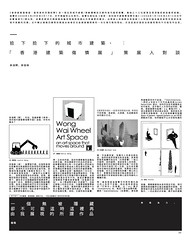
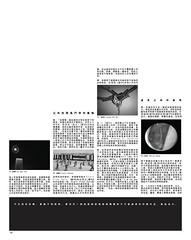
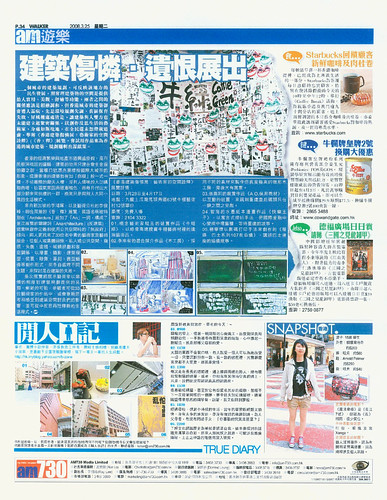
Media Coverage: am730

MEDIA COVERAGE
Hong Kong, 25 Mar 2008
am730, p. 34

am730

Monday, March 24, 2008

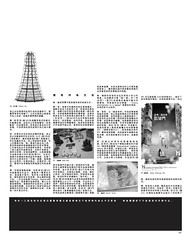
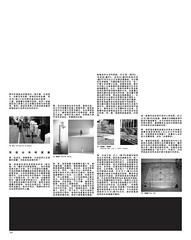
Images of HKAB artworks

ARTWORK IMAGES
Hong Kong Anarchitecture Bananas
29 Mar 2008, Hong Kong

001
001
區華欣Au Wah Yan
山脊線The mountain ridge
攝影Photograph
2007

002
002
張嘉莉 Clara Cheung
A.O. 保育教材Teaching Material for Government’s Administrative Officers
混合媒介Mixed media
2007

003
003
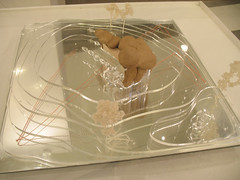
陳淑雲Suki Chan
在寂靜之中
In Silence
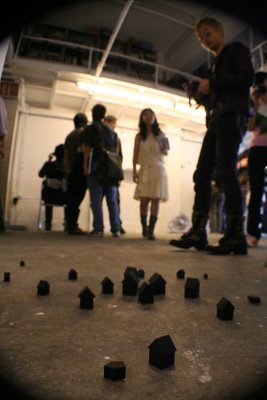
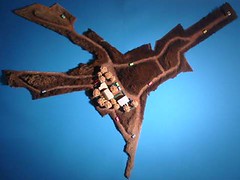
木製屋裝置Mixed media
2005

004
004
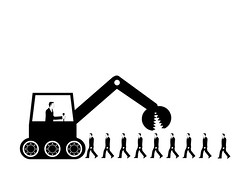
朱德華Almond Chu
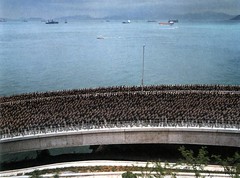
遊行Parade
攝影Photography
2005

005
005
泥人 Cornelia Erdmann
移民 Squatters
裝置Installation
2008

006
006
郭孟浩 (蛙王) Kwok Mang Ho (Frog King)
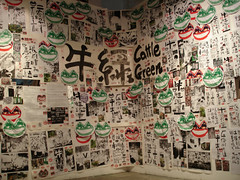
牛蛙綠Bull Frog Green
眼置Sight installation
2008

007
007
馮嘉儀Kady Fung Ka Yee
在世界中心呼喚蓋Building Out Seals, In the Center of the World
裝置.篆刻Installation, seal print
2008

008
008
[WAS] We Are Society
生活在城市,感覺懨悶的100種可能100 boring experience in the city
攝影與文字Photograph with text
2008

009
009
Andrew S.Guthrie
Stack
攝影裝置Video installation
2008

010
010
何文聰 Homan Ho
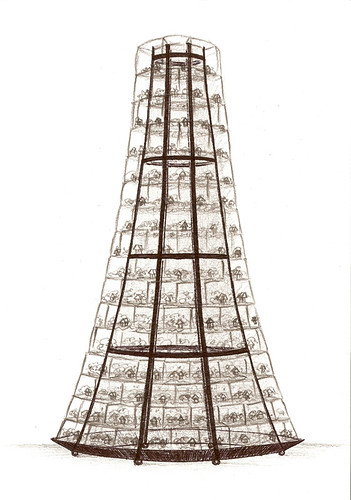
176 people Perfect City
混合媒介Mixed media
2008

011
011
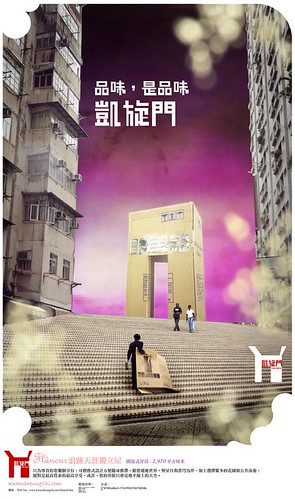
關尚智Kwan Sheung Chi
凱旋門The Arch
數碼合成圖像能達輸出燈片、燈箱Digital collage lambda clear print, light box
2005

012
012
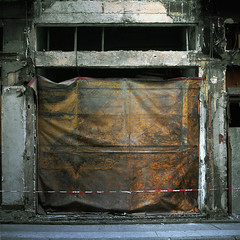
劉智聰Lau Chi Chung
傷城A wounded city
攝影Photography
2008

013
013
智海Chihoi
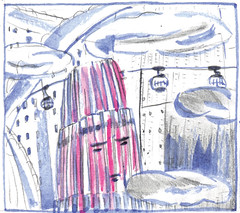
快樂王子Happy Prince
鉛筆墨水紙本pencil and ink on paper
2005

014
014
李鴻輝Michael Lee Hong Hwee
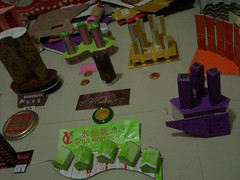
Every Architecture is a Banana
紙雕Paper sculpture
2008

015
015
梁志和Leung Chi Wo
袋鼠島大開發The Great Development of Smythe Kangaroo Island
混合媒介/錄像Mixed media/ Video
2003

016
016
張偉樂+梁展峰 Cheung Wai Lok + Jeff
夾縫GAP
攝影Photograph
2008

017
017
李來有Li Loi Yau
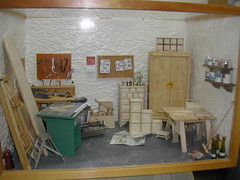
木工房Wood-work Studio
混合媒介Mixed media
2008

018
018
吳鋌灝Ng Ting Ho
再造聲律Rebuilding resonance
混合媒介Mixed media
2008

019
019
湯映彤Yentl Tong
Before and After and Ever after
混合媒介Mixed media
2007

020
020
謝健華Galen T se Kin Wah
門 Doorway
數碼打印Digital C-type Print
2008

021
021
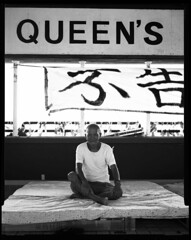
謝至德Ducky Tse Chi Tak
Portrait of the Queen Pier 2007
數碼黑白打印Black and white film on Archival pigment inkjet print
2007

022
022
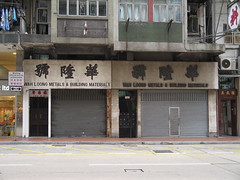
尹麗娟Annie Wan Lai Kuen
華隆號Hua Long Lao
攝影Photography
2008

023
023
王浩然Adrian Wong
Tunnel-Vision
雕塑/錄像裝置Sculpture/Video Installation
2008

024
024
黃國才Kacey Wong
分間Partition
雕塑Sculpture
1998

025
025
黃慧妍Wong Wai Yin
Artist Fee: Wong Wai Wheel Fundraiser 2008
裝置Installation
2008

026
026
黃照達Justin Wong Chiu Tat
Animation still from Events
動畫Animation
2008

027
027
楊學德Yeung Hok Tak
隧道.巴士系列107長命債Tunnelbuseries:107
數碼打印
Digital print on paper
2006

028
028
丸仔Yuen Kin Leung
窩牛碎片: 現場灣仔遺骸Pieces of S-Nail: RE:Wanchai REmains
裝置Installation
2008

029
029
蔡嘉宏Tsoi Ka Wang
深水埗天台A Roof in Sham Shui Po
攝影Photography
2007

030
030
白雙全 Pak Sheung Chuen
五個人行的斑馬線A Zebra for 5 Persons
錄像記錄Video documentation
2006

031
031
李俊峰Lee Chun Fung
造船記Nomad
混合媒介Mixed media
2008

032
032
Start from zero
Lost
攝影記錄Photography documentation
2008

033
033
梁御東Ocean Leung Yu Tung
Binder’s Peristalsis
錄像裝置Video installation
2008

The Impossibility of....

TEXT CONTRIBUTION
29 Mar 2008, Hong Kong
(This is an unedited draft. Cite only from the printed brochure.)

Yeung Yang reflects on reasons for declining the curators' invitation to show an earlier gesture as an artwork in the exhibition, Hong Kong Anarchitecture Bananas.


The impossibility of showing without hiding a “work”[1]

by Yeung Yang


I am not ready. I want everything. I want nothing.

Night

`“Continue. Don’t run out of breath. Your body is not the same today as yesterday. Your body remembers. You don’t need to remember, to store up yesterday like capital in your head. Your memory? Your body reveals yesterday in what it wants today.”[2]

That night, it was the height of an erection my body aspired to. It was the height of an erection my body disgusted at. I climbed, fearing fall. I ran, fearing loss. My fingers clattered on the keyboard, fearing silence. It was too white, too dark, I wanted to touch it, fearing “all”.

I wanted you to want to scream like I wanted to scream. I wanted your scream to glide. I wanted to shake you up like I would the lifeless body of a beloved.

Day

You asked me for a “work” of which I was a fleeting part. I refused. It is difficult. “Why difficult? Because one must refuse not only the worst but also what seems reasonable, a solution one could call felicitous.”[3]

In broad daylight, I have no a sense of dimension of my body in relation to your gesture of recollection.

InonebreathIcommunicatetoyouweightproximitythicknessthatcombineto
resemblethememoryofthatnightthatbelongstoapastthatcannotstopexertingits
claimonthedaylayingbareandexposedandrumblingsoitrefusestoservebutremains inconcilationwithbrevity.

“Open your lips, but do not open them simply. I do not open them simply…From your/my lips, several songs, several ways of saying echo each other. For one is never separable from the other. You/I are always several at the same time.”[4]

The “work” was the result of surrendering to the certainty of embarrassment. The surrendering was possible by splitting embarrassment into two kinds: first, the embarrassment of not “doing” anything, and second, the embarrassment of stumbling, failing, and appearing squeamish in face of uniformed and armed authority. When split, the certainty of embarrassment becomes real. The “work” began when a split second of spontaneity squeezed out of that reality.

Night

“Tell me a story, Pew.

What kind of story, child?
A story with a happy ending.
There’s no such thing in all the world.
As a happy ending?
As an ending.”[5]


Notes:
1] See curatorial writing of this brochure mentioning the “work”, and South China Morning Post report Nov 19, 2006.
[2] Irigaray, Luce, “When Our Lips Speak Together” in Journal of Women in Culture and Society, 1980, vol.6, no.1, pg.76.
[3] Blanchot, Maurice, “Refusal” in Friendship, trans. Elizabeth Rottenberg, Stanford: Stanford University Press, 1997, 111-2.
[4] Irigaray, 1980, p.72
[5] Winterson, Jeanette, Lighthouse Keeping, London: Harper Perennial, 2005:49.

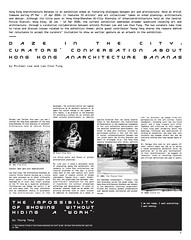
Daze in the city

CURATORIAL TEXT
29 Mar 2008, Hong Kong
(This is an unedited draft. Cite only from the printed brochure.)

Below is a draft of the curatorial text for the exhibition, Hong Kong Anarchitecture Bananas: Artists who reclaim space, held at Artist Commune, Hong Kong, during 29 Mar - 17 Apr 2008.


Daze in the city:
Curators’ conversation about Hong Kong Anarchitecture Bananas


By Lee Chun Fung and Michael Lee Hong Hwee


Michael Lee: Earlier this year, you and I visited the Hong Kong component of the Hong Kong-Shenzhen Bi-City Biennale of Urbanism\Architecture held at Central Police Station. What were your observations?

Lee Chun Fung: The Architecture Biennale at Central Police Station excited me a little but also provoked me to think critically about space. Its overall utopist tone reminded me of actor Alex Fong’s promise in his TV role as a maverick architect: “Architecture can change the world.” I am not sure about that. You know, architects work by commission, mostly in accordance to the profit-driven logic of the developer. The architect-artist who regards architecture as an aesthetic pursuit or an agent for social change is not common in this region. I am grateful to the Biennale for providing a context for us, artists and other cultural practitioners, to identify its blind spots and those of global architectural practices, through an exhibition.

ML: Like you, I noted a prevalent sense of utopianism among the exhibitors, the tendency to claim that architecture can resolve problems of the day. A quick check back at the last century will yield major cases of utopist visions of single charismatic figures (e.g., Lenin, Hitler, Pol Pot) who prescribed and defended ‘one-size-fits-all’ solutions for the good of all of humankind, not without widespread sufferings and devastations. In place of universal utopias, might we be better off pursuing personal ones on small scales? In addition to utopianism is a sense of age-old binarism that ran along several lines in the Biennale: the hierarchised differentiation in the respective treatments of the core exhibition participants and the parallel exhibition participants, the latter of whom were initially invited to participate without a fee; and the lack of mutual contextualization between the two cities where the bi-city Biennale was meant to co-engage (e.g., the Hong Kong website hkszbiennale.asia hardly mentions its Shenzhen counterpart)[1]. Finally, like most biennales across the globe today, the Hong Kong Architecture Biennale was subject to the spectacle, favouring large-scale, hi-tech and visually dynamic presentations over smaller-scale, non-digital and quieter voices.

LCF: As artists, we speak from our perspective in the art circle. Every standpoint, including ours, has its blind spots, and I hope viewers will offer feedback and criticism in this regard. I have long been wondering about the meanings, functions and implications of holding an exhibition, and hope that such concerns may engage others who may be similarly stirred when they become aware of them.

ML: Perhaps this wish to jolt people off their comfort seats has led us to derive a rather provocative exhibition title. By prefixing ‘an’ to the word ‘architecture’ to form ‘anarchitecture’, we suggest an ‘anarchic’ slant of resisting corporate and official definitions and uses of public space. ‘Anarchitecture’ is of course a word coined by the late artist Gordon Matta-Clark in titling some of his 1970s photography of architectural ruins as well as in framing his broader critiques of architectural practices, the most notable of which include instances of cutting, sawing, smashing or sculpting away parts of physical buildings (e.g., Splitting, 1974). Matta-Clark’s ‘anarchitectural’ practice suggests a fluid framework of relating order and disorder, as do the London-based Space Hijackers (spacehijackers.co.uk) whenever they create pockets of space and time to let loose within the confines of pre-defined urban spaces. In this exhibition, we hope to foster refreshing ways of relating art and architecture, and seeking personalised pockets of space and time including ‘going bananas’ within pre-designed public spaces.

Public space is a battlefield

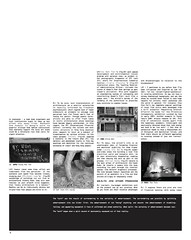
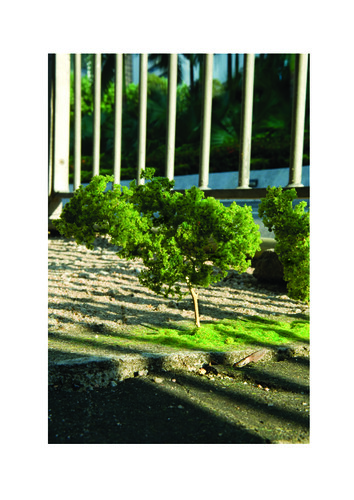
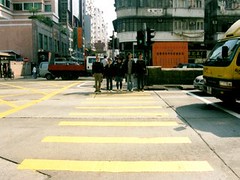
LCF: While ‘anarchitecture’ seems an Western concept, it is not alien to Hong Kong. Since the early 1970s, Frog King has been interrupting public space such as by throwing paper around amidst the formality of art museum openings. Recently, he made installations comprising potted plants as an in-joke on the Cattle Depot security guards who encourage plants but not artworks to be displayed in public areas for the sake of enhancing the environment. For the present exhibition, he will show a video featuring hundreds of photographs of these plant-artworks snapped in limited time, symbolic of the heavy surveillance we are subject to daily. Among the younger generation of artists concerned with reclaiming their rights in defining how to use public space, the street art collective Start From Zero and conceptual artist Tozer Pak Sheung Chuen are exemplary: Start From Zero regards its dual mission as firstly, regarding public space as a readymade canvas for self-expression, and secondly, treating low points in one’s life as opportunities for new beginnings. Pak’s 2006 performance, entitled Zebra for 5 Persons, with four fellow artists, of repeatedly walking besides one another in a horizontal line across the road is a case in point. By misusing the road in ways for which it is not designed, Pak highlights the domineering power of architecture (in this case, the zebra crossing) on human thought and actions. Architecture has the effect of mechanising human thought and action, leaving little space for wander.

ML: Order numbs the mind. But it can create anxiety too. Almond Chu’s Parade (2006) is a series of four photographs depicting thousands of people in the same uniform making their way orderly along public bridges. Their uniformity refers to the lack of individuality in an Orwellian world of complete surveillance and subjugation, but just as powerfully, it appears like a return of the abject through the amassment of miniscule organic-like forms. Buildings come with specific narratives of use by their designers, but that does not stop the end-users from undermining these rules, whether consciously or accidentally. Andrew S Guthrie’s multi-video installation of happenings behind the windows of high-rise residences at night may easily be labeled indulgent ‘voyeurism’. However, in jam-packed areas like Hong Kong’s downtown, residents may only have a palm’s distance away from their neighbours’ windows. In this regard, investigating into what goes on behind home windows is a way of extending one’s space beyond its physical limits.

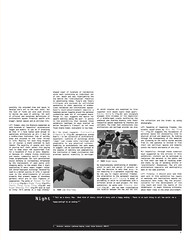
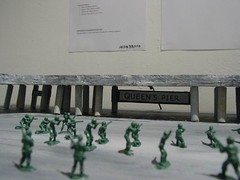
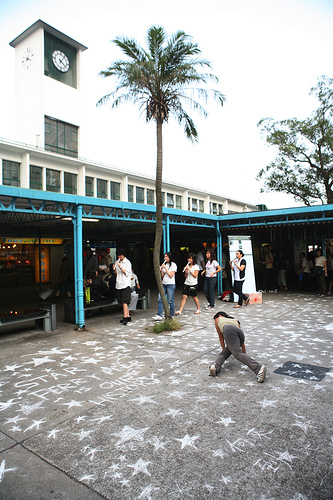
LCF: Another notable instance of artists staking their claim on the use of public space is their diverse takes on the demolition of Star Ferry pier and clock tower. The art collective WAS made a sound performance by using the recorder to churn out the melody of the clock tower’s familiar alarm. Betraying their anxiety about the erasure of ‘collective memory’ of the tower, this work could be read as an attempt to extend a story that has been suddenly put to a premature end. Ducky Tse Chi Tak’s photographic diptych records a man against the background of the Queen’s Pier protest, whose identity hovers between a homeless person and an activist. The figure of this man in one photograph and that of Chinese junk in the other are two possible identity positions for Hong Kongers: from the grounds and as defined by the authorities. Yeung Yang projected texts onto the tower, one of which read (Barbara Kruger-style): “I am not your problem.” Her action is a reminder that the Star Ferry demolition should not be regarded an isolated problem but a symptom of deeper and more complex issues relating urban redevelopment, corporate interests, cultural conversation and democratic processes.

Nostalgia of Nowhere

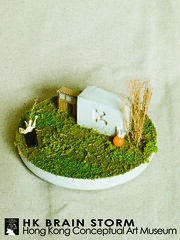
ML: Architects and planners today regard their primary mission as one of ordering chaos, or ‘taming the wild’. Their discomfort with chaos is also evident in the tendency to arrest the passing of time as recorded on architecture. As soon as a building shows signs of age, dirt or mess, there is an immediate, perhaps maternal, instinct to spruce, clean or tidy things up, to upgrade, and in numerous cases, to replace with something new. We are not wishful thinkers that buildings can stand up forever. They cannot. We only wish to stir discussions on what constitutes value in architecture, planning and design and what principles are useful in making decisions about urban redevelopment and heritage conservation. In the context of developmentalism, architectural ruins have the effect of slowing things down, by letting forgotten spaces exist at their own time. Perhaps this is why they are distressing to developers and redevelopers alike. In the photographic works of Galen Tse and Lau Chi Chung, architectural spaces, structures, fittings and fixtures of yesteryears assume a haunting beauty, having been lovingly composed in ways that return them a sense of dignity. Suki Chan plays with scale to conflate different contexts of memory. Her installation of small black houses strewn across the floor appeals to our childhood memory of playing toys as much as to recent recollections of scenes of devastation in ongoing disasters both natural (e.g., Tsunami) and manmade (e.g., war). Li Loi Yau’s 1:12 miniature of a wood woodshop depicts the ruin with which artists are most familiar – the mess in the creative space. The fine detailing of every piece of furniture, tool and material in the miniature is a homage to creative process as much as a testament to time and labour expended at handcrafting.

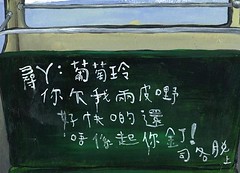
LCF: Once we become receptive to the idea that there are aesthetic, cultural, historical and emotive values in the ruin, we will be less anxious about dealing with it, not to mention getting rid of it right away. For example, the juvenile writings at the back of bus seats or toilet doors, often dubbed ‘vandalism’ by the officials, could be read as intimate records of human communication and relationships. Away from official scrutiny, such spaces play host to creative reclamation by ‘anarchitects’ who use public furniture as their canvases or chat rooms, as Yeung Hok Tak’s comics suggest.

ML: Yeung’s work turns our attention to sites of collective memory other than the publicly visible civic structures and buildings.

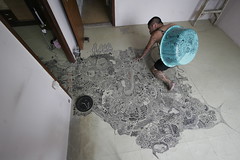
LCF: Similarly Yuen Kin Leung, in his performance in RE: Wanchai Hong Kong Artist-in-Residence programme, he wriggled on the floor like a snail, the graffiti on the floor and the shell on his back becoming a merged space under our surveillance. For this present exhibition, three years after making that work, he will re-construct the floor which he safekept from the now demolished old building in Wan Chai. Memory is not easy to reconstruct but that does not stop artists from trying anyway. Ceramicist Annie Wan Lai Kuen’s work has long been attempts to arrest memory of physical reality through handmoulding. In her new work, she takes photographs of ‘twin shops’, adjacent shop fronts with the exact same name, stirring the uncanny aesthetic experience not unlike the fascination with encountering human twins.

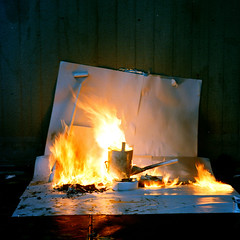
ML: Such ambivalence continues in the ruins of Max Tsoi, who makes scale models of objects, which he then burns and then photographs. An invitation into an uncanny world (much like the intrigue of Thomas Demand’s photographs of models) and then a barrage against entry (just as the burning ritual delineates the living from the dead), Tsoi’s work reminds us of the paradox of life and death: The two are not mutually exclusive but constantly present and interactive terms. Buildings, like people, begin dying the moment they are born.

Planet Humour

LCF: Perhaps the best instance of the coexistence of life and death, expression and suppression, is in the joke.

ML: Indeed, beyond serving entertainment and socialising ends, humour is a powerful tool for criticism. For Freud, the witty joke, likened to a dream which fosters “the disguised fulfillment of repressed wishes”, provides a channel through which dangerous ideas may be safely communicated without the possible repercussions. Humour figures prominently in your (Lee Chun Fung’s) practice. Sometimes it exists as a twist (e.g., an intricately handmade model of a warship which turns out to be a nail filer), othertimes in parody (e.g., in you proposal to build a slanted bamboo scaffolding that mocks at its cliché prevalence in various exhibitions in Hong Kong). This connects your practice with Justin Wong’s, whose animations depicting relationships between small-size and large-size people are often mediated through For physical objects including buildings. They are satires of our usual way of perceiving the relationships among people and space, and are a call to reactivate our imagination somewhat., art institutions themselves are in ruins. She reflects this in her layered representations of imaginary art institutions first by model-making, then photography of these models before finally graphic design. For this exhibition, Doris Wong Wai Yin will devise a system to raise funds for artists in biennales – a task that organizers and host institutions ought to take up but often shy away from. Wong’s work is a power critique that behind institutions that expressly support the local art scene could be a structural ruin that call for urgent attention.

LCF: Humour takes some time, effort and commitment from the perceiver. If the audiences just spend five seconds closely studying your (Michael Lee’s) assemblage of buildings cut out from a book, they will soon realize, as your artwork title suggests, that “every architecture is a banana.” Reality can be so ridiculously obvious and in-your-face that people are blind to it.

ML: To be sure, such interpretation of architecture as a phallic enterprise is heavily informed by Freudian psychoanalysis, which regards most of human endeavours as attempts to assuage some perceived lack (for Freud, men’s fear of losing his penis). Through poetic turns, artists are able to offer fresh takes on iconic architectures whose meanings have become deeply entrenched. In this regard, the IFC (International Financial Centre), the tallest and most iconic structure in Hong Kong’s downtown area, appears to recur as a subject of investigation by various artists. In his comic spreads, Chihoi imagines a scenario in the future when IFC, now derelict and abandoned, starts to find new meanings and destinies for the continued existence of itself and Hong Kong people.

LFC: Au Wah Yan’s work weaves issues of development and environmental problem with personal issues, as evident in her photographic fragments of IFC made by casting parts of mineral water bottles. Clara Cheung’s interactive piece, The Teaching Material of Administrative Officer, where the cutout of Queen’s Pier springs up upon viewer’s activation. This work suggests an engineering system of collapsing and resurrecting Queen’s Pier, much like a popup card – the artist’s parody of the tendency of the authorities to prescribe easy solutions to complex issues.

ML: To many, the artist’s life is an unbelievable joke, of forsaking financial and emotional stability for some higher order. Warren Leung Chi-wo’s model-and-video shows him building a town from electrical parts and kangaroo skin. He is seen attentively shampooing, combing and then shaving the skin as part of the process. Adrian Wong returns to the most primal of architecture: the human body. He inserts a camera into his body through his mouth recording its path through his interior spaces, in a way not unlike how doctors do it for certain diagnostic processes. The line between humour, masochism and the pursuit of an aesthetic is a fine one that artists willingly or helplessly tread.

Wealth and Other Freedoms

ML: Low-tech, low-budget exhibitions such as the present one we are curating: What do you think are their relative advantages and disadvantages in relation to the blockbusters?

LCF :I have mentioned to you that I’ve been immensely influenced and inspired by Gum (of C&G), for his ‘street-fighter-aesthetics’ in curating exhibitions. He may not have a strong theoretical background, and yet the shows he curated never failed to have huge impacts for artists, their audiences and the world in general. For instance, Chow Chun-fai’s now immensely popular paintings of local film stills were developed from a lo-fi animation (Repainting Infernal Affairs) he made for the Primitive Contemporary exhibition curated by Gum in early 2007. Another example is Yeung Yang’s 14QK: Artists respond to 14K. This kind of exhibition stands apart from the seemingly academic, intelligent and emotionally detached shows that lack energy and tend to be ‘too safe’. I feel that an exhibition needs to have a Nietzschean mix of Dionysian and Apollonian forces, and that there should be different approaches to curating instead of just one ‘correct’ school.

ML: I suppose there are pros and cons of financial backing. With money comes possibly the extended time and space to develop one’s art to the next level. But the lack of funds can also push artists to devise new ways of working. Yet much of official and corporate definitions of architecture equate financial wealth with bigger, better spaces and an enriched life.

LCF: Indeed, when the Biennale bombarded me with hundreds of ‘beautiful’ architectural images and models, it was as if promising me that if I have tastes good enough to appreciate architecture as art, I must be a middle-class individual free of worldly woes and attuned to the finer things in life. Reality for most Hong Kongers is, of course, a stark contrast to such ideals: The majority of people work hard at pouring half their salary into paying rent to keep their 400 square-feet flat for a household of five or more. Despite, or because of, simple living conditions and needs, community spirit reigns in these neighbourhoods. But such personalised social bonding is increasingly threatened by the replacement of open parks with shopping malls, to the extent that I start questioning if more, newer, bigger, taller and better-equipped buildings necessarily lead to a better quality of life. A typical case is the advertisements of private property, which present images of boundless gardens, which are in fact figments of imagination. The works of Homan Ho Man-chong, Kady Fung Ka-yee, Yentl Tong Ying-tung and Kwan Sheung Chi mock at such an irony. Ho’s parody is a huge chimney-shaped tower of hundreds of residential units each containing an individual set of sun, beach and sea., highlighting the lie behind the ‘individualism’ rhetoric of much of advertising today. Fung’s and Tong’s critiques are pursued by unfinished aesthetics in their depiction of middle class residences and institutional spaces. Kwan’s mock-advertisement depicts a homeless person lugging around his personal condominium made out of corrugated board. Though it, too, suggests the desire for upward mobility among the poor, it points to the possibility that because these wanderers (perhaps in ways similar to Walter Benjamin’s flaneur) do not have fixed stable homes, everywhere is now home.

ML: In that regard, Cornelia Erdmann’s echoes Kwan’s perspective, in her collection of architectural squatters, cushions of buildings whose ‘legs’ can clamp onto railings and adaptable to any physical context. Stability in architecture, her work seems to suggest, can be overrated and pursued at the expense of mobility and adaptability. One institution of human civilization that promises spatial stability is marriage, in which couples are expected to live together till death tears them apart. Kacey Wong’s wall sculpture engages this dilemma in its depiction of a middle-age couple backfacing the audience and staring blankly into their respective spaces separated by channels and corridors. The order that institutions like architecture and marriage provide can also be simultaneously constraining of disorder, which is part and parcel of growth, so that the decision to defy them (e.g., in not remaining in a permanent coupling) may be one way to regain personal freedom. One alternative to the permanent coupling is suggested in Jeff Leung’s model of art-making in which he collaborates with a different artist on each project. For this exhibition, he works with Cheung Wai Lok who has been investigating the relation between the new and the old, the collection and the trash, by using photography.

LCF: Speaking of freedom, the kinetic sound piece by Roy Ng Ting Ho suggests the reclamation of personal space not necessarily tied to physical arrival and departure. By looking through the transparency of his material and listening to the subtle sounds emitted from it, the audience is invited to find their own spiritual spaces and moments within the hustle and bustle of the city.

ML: Hopefully, through these numerous ways suggested by the artists in this exhibition, visitors can be motivated to rediscover the personal in the public and to find their own mode of relating order and chaos, by way of becoming artists or ‘anarchitects’ themselves. May art and architecture regularly and meaningfully meet on the same platform.

LCF: Finally, I should also add that each work in this exhibition has layers of meanings and implications beyond our discussion here today. May the artists’ concerns for the development of the city reach and touch the hearts of its inhabitants, to begin thinking critically about their roles in the urban environment.

Sunday, March 23, 2008

Invitation Card

INVITATION CARD
24 Mar 2008, Hong Kong


Tuesday, March 4, 2008

Hijacking Marashow (part 1/2)

EVENT DOCUMENTATION

Hong Kong, 24 Mar 2008

Marashow

Central Police Station, Hong Kong

24 Mar 2008, 2-8pm

Proceed to Part 2

Chun-fung and I were invited to make a curatorial presentation on our upcoming exhibition, Hong Kong Anarchitecture Bananas, in Mara-show marathon talks organised in-conjunction with HK-SZ Architecture Biennale. It was held in Central Police Station, Hong Kong, 24 Mar 2008, 2-8pm.

For this presentation, we dressed ourselves up as the IFC twin-towers (an extension of Kacey Wong's skyscraper/spaceship).

Our presentation attracted many onlookers who came forward to take pictures and watch us make a fool of ourselves. The crowd roared with laughter when I (Michael Lee) flew paper aeroplanes at him (Chun-fung), a la 911, then flew these aeroplanes at the audience, and finally announced that these planes were in fact our exhibition's press release.

This presentation could be loosely named as our exhibition's hijacking of the Biennale event.

Cheers

Michael & Chun-fung

P.S. Many thanks to Chun-hei for documentary our act.


Hijacking Marashow (part 2/2)

Back to part 1